Friday, 12 June 2020

Drop Ten, turn and face. Quilty’s football yarns 29

‘Drop ten, turn and Face.’ 
Quilty’s Football Yarns 29
London heat and off to Israel to for the first time.
Sometimes things just seem to work out. In mid-1976 I was working as a gardener for Hackney Council up in yard behind Shoreditch Church. It just happened to be the hottest UK summer in about a hundred years! I was part of a team that went out the estates to cut the lawns and turn the flower beds. Our main area was down Hoxton and up to New North Road. We’d get a certain amount of time to do each bed. Depending on how much we did, went theoretically towards our bonus. Theoretically! Working for the council was surreal. Our yard employed about 20 staff and really it was a competition around who could do the least work. Like anywhere there was a work Hierarchy. Tilston was the big boss. McDonald his second in command with Paddy the foreman. Then there was us, the gardeners. In reality the official chain of command bore little in common with where power actuallylay. There were three young blokes I worked with, Terry Horwood an old school mate, Pat Power from Islington and Orley Thorn from Barbados. There were also five or six older blokes who were particularly ‘well in’ with Paddy. We’d be in the yard by 7.00am, sit for half an hour drinking tea and reading the paper before being dropped ‘out on the streets’ at 7.30am by John the van driver. John was probably the slowest driver in the world and never drove quicker than 15 MPH. This was fine but being couped up in the back of the yellow windowless van could be wearing, especially with six or seven cigarette smoking oldies. Arriving at our council estate destination, we got out, waved the van off and chucked our tools in the bushes before going for breakfast at the local café. Minimal work was ever done especially in this scorching summer. Me and two of the other two young blokes actually tried to work as hard as we could one week, to see if could earn a decent bonus. We needn’t have bothered because come Friday we got 12 pound each while the oldies got 21. I confronted Paddy while we in the yard. Everyone was there.
“Hey, Paddy. What’s the go with this bonus? We worked as hard as we could this week and we end up with 12 pound each!”
He replied with” You don’t come into the Duke of York to buy me a drink Friday morning, that’s what these other (old) blokes always do”.
Amazed I came back with “So you are saying, in front of everyone here, that I have to come and bribe you to get a decent bonus?” And yes he was. That was how it worked. In the following weeks we’d go along and see the others collect their pay, pop in the boozer, buy Paddy a drink and then knock-off work at 11.30am. This was every Friday. Of all the management only Mcdonald tried to get people working properly. Unfortunately for him he couldn’t drive and only had a bike to ride around the streets and flats of Hoxton. The big boss Tilston and Vince the union man formed an unholy alliance. They actually ran a business on the side, selling Council potted plants to local cafes and restaurants. To add another level of cheek, John the van driver, in his inconspicuous yellow vehicle, dropped them off! He just did as he was told. I’m sure he’d had some sort of trauma because he never said a word to anyone. There were a very special people working with us. One bloke, ‘Larry the lawnmower’, refused to stop mowing the lawns even in the searing heat. As people will remember the Summer of 76’ was so dry that much of the grass just died. This was the grass not caught fire by Larry.! He was convinced that if he stopped cutting he would not get paid. If you told him to stop he’d just storm off and lock himself in one of the cupboard rooms on the estate. Poor Larry. Probably the funniest thing I saw working on the Gardening Team was when Terry Horwood fell foul of the ‘time and motion man’. Terry always ran his own race not getting involved in Yard politics. Phil another guy who was the same. Why would he? He actually had a newspaper stand right in front of Shoreditch Church and he ran it while he was supposed to be gardening! On this particular day, Terry was being observed by the ‘time and motion man’. He was told to just go through his normal routine, so he did. He worked to 8.30am and then went to the café for breakfast. Of course the ‘time and motion man’ went with him and Terry treated him to a fried breakfast. Only at the end of the week when the blokes report went in did terry discover that he had written down on the sheet, ’worked for hour…went for breakfast for an hour and a quarter’. Obviously, Terry had never been the subject of a productivity study before. 
Towards the end of 76’ I was making plans to go away to work on Kibbutz in Israel and left the Hackney Council gardening job. It had been an eye opener. By the end I was turning up to work in in shorts, flip flops and a towel underneath my arm. After a couple of hours at work we’d shoot off to the swimming pool for the afternoon. The only other thing I carried around with me was a rake so that I could pretend to be working wherever we were. As I left the job I decided to write a ‘pilot’ for a sit-com based on the yard. This I did with my late friend Tony Fuller. It was called ‘On the Borough’. It was of its time and although we sent it to London Weekend TV it never got a run. Reading it today it comes across as being very inappropriate. It was of its time.
On January 4th 1977 my mate Paul Mordecai and myself flew out of London via El Al and into Tel Aviv. As explained previously, going to work on a Kibbutz had been on our minds for quite a while. Project 67’ were the contact group we used and they put us in touch with Kibbutz Representatives in Tel Aviv. I had 100 pound on me and Paul had 150. Leaving a cold London, we were met by an even colder Israel. At the time it was actually snowing in Jerusalem. We were off for about six months and went loaded with all sorts of clothing. In the Kibbutz Representatives office, we were directed toward our assigned destination, Kibbutz Tel Katzir in the Jordan Valley, overlooking the Sea of Galilee. After a few hours bus ride north, we arrived at what I eventually came to consider one of the most beautiful places I’d ever lived. On this day it was bleak and teaming with rain. As we stumbled into the door-way of the chalets where the volunteers lived, there, in front of us, were two blokes sprawling on improvised armchairs, head to foot in muddy, wet clothing. Their boots were laying nearby. For a moment the world stood still. They looked at us and we at them. 
Then Paul spoke, “We are here to volunteer, are we at the right place?”
Our two hosts suddenly broke their stare from these two outside world dandies, replying with,
“Hi, this is ‘John the Pom’ and I’m Steve Rosen, a ‘Saffer’.
As we were to find out slightly later these guys thought we were hilarious in our stiff formal introductions. Here we were about to descend into a wonderful world of freedom, communal living and not a care in the world.
Tel Katzir was the size of a small town with 300-400 regular inhabitants. On our Kibbutz there were usually 40-50 volunteers, some Jewish, some not, from almost everywhere across the globe. We lived nearby to but separate from the ‘Kibbutz members’. Basically, the deal was that you did a day’s work in the fields and got food, beer, cigarettes, chocolate and a few dollars a month with somewhere basic to live. We worked primarily in Bananas although occasionally did irrigation. Our place also kept chickens which had to be transported out at 12 weeks...done at 3.00am and this job should be added to my list of ‘the worst jobs ever’. The chickens were ambushed and carried out to the trucks. They could not be slaughtered on site. It wouldn’t have been kosher. Carrying those birds, four in each hand was ghastly, something I’d never want to do again.
Chickens aside, these were fantastic times. The Kibbutz was a place where you could work, relax and basically sort out your thoughts in idealic surroundings. Tel Katzir outlooked the Sea of Galilee while at the same time being dominated by the Golan Heights. I managed to learn basic Hebrew working alongside Ben Yamin and Levi, the Banana picking experts who were Libyan Jews.  The kibbutz was a place where you could pause your travel, live and work. As mentioned, Tel Katzir gave the volunteers cigarettes, cheap Nesha beer and as much red dinner wine as you wanted! The food was healthy and excellent. The experience was of its time. 
Working on Kibbutz Tel Katzir in 77’ I was taken off site a couple of times. One day I went to the banana co-op that we belonged to, a central packing distribution centre nearby in the Jordan Valley. I was quite a good banana stacker, all in the technique...lots of bigger blokes hurt their backs doing it. Anyway, this day, there I was watching these three giants unloading the hagalah. Eventually when I asked what I was supposed to do. The Israeli just said “Wait until they get tired and you can take over”.
On another occasion, our ‘banana team’, made up of about 15 people, including the Israeli members, were invited to the house of the Arab guy who supplied us with the chicken poo fertiliser. It was wonderful being served a ten-course meal with no luxury spared. All sorts of roast meat, sweat deserts, the best European spirits and Belgium chocolate. We were served by the men of the family only getting a fleeting glimpse of the females of the group. It felt a bit awkward at times because although it was a wonderful spread, a couple of the Israeli’s were abrupt asking for seconds of the cigars. I know it was done ‘tongue in cheek’ but awkward to me.
Another day twenty of us volunteers were taken for the day by truck to work on a place atop a big hill. They were in the first stages on constructing buildings and pathways. Only in later years I realised that this was probably a new settlement somewhere down the Jordan Valley, on the way to the West Bank. As you would imagine quite a few new experiences for a young Londoner. On Tel Katzir I had never driven before but they trusted me to drive the tractor and trailer back up from the fields. I had no idea about the gears! I drove past one of the members who nodded but I knew he had his doubts about my driving ability. Probably the best thing about working on a kibbutz was that material things meant very little. Most of us had just the clothes on our back. You got by on who you were, not what you had. In just a short time people got very close. I can understand the feeling that these reality TV people get in isolation from the real world. Kibbutz was like that. You worked hard, played strongly and were virtually care-free. That is why, in spite of leaving after six months that first time I knew I would return and did so on two more occasions. Leaving in June 77’ I had realised that I wanted to be a school teacher but had return to study in order to do so. The world had also changed somewhat by the time I returned to London. My cousin Tony Beard took me out to film premier up at Tottenham Court Road, as a treat when returning home. “It’s a space film” he said. Going along, it was quite enjoyable. “They may have hit on something there, Tony”. I speculated. And so it was, Star Wars  turned out to be quite a thing.

Drop ten, turn and Face.’ Quilty’s Football Yarns 30 Study and travel.

‘Drop ten, turn and Face.’ 
Quilty’s Football Yarns 30
Study and travel.
Returning home to London after six months on Kibbutz in 1977 was difficult. Not least because I realised it would be tough to become what I had set my heart on. Becoming a teacher. Walking out of Parmiter’s in early in 71’ with Billy Lee had meant I had booked a future price to pay. I had to take a few steps backwards to go forward to finish my education. My cousin Kim had done teacher training up at Tottenham Teaching College, so she arranged an interview for me with the Dean. I reasoned that my seven years of work experience might get me some consideration. I was bitterly disappointed. The best they could say was,
 “Get one A Level and we will make you an offer”
My response was to say “If I study, I won’t get one, I’ll actually get three A Level’s and won’t be training here!” And so it was. I left Tottenham Teaching College that afternoon with the fire of intention burning fiercely in my heart.
Immediately I went to enrol at Hackney College, Stoke Newington Campus. At school I’d actually started A Levels with English being my favourite. However, at 23 my interests had shifted and I went with Economics, History and Political Science. 
Sometimes in life you tell a little white lie to make things a bit more straightforward. This was the case when I told mum I was going to train for teaching. It was complicated. I needed two years for A Levels, three years for an Honours Degree and a year Post Graduate study. Six years all up. In the event I was training to be a teacher for six years. Simple. I just said it was a six year course. Not everyone has such supportive parents. Whether going away to travel or stopping work to study, at that time, you were doing a less than typical thing. I always said the fact that 95% were content to do the regular thing allowed a few to be irresponsible and swim against the tide. After my Tottenham Teaching College experience, Hackney College provided me with a great platform for my re-entry into education. Della Bishop for Politics, Lawrie Patterson for History and Frank Moore for Economics all challenged me in different ways. Della through discussion, Lawrie through story-telling and Frank through analysis. Between them they awoke me to ideas, helped build a framework for understanding and most importantly gave me my passport to eventually head up to Leeds University for four years in the cold harsh north.
Early in the summer of 78’, after my first years study I set off again back to Israel with three mates. Gary Collins, Johnny Colbert and Steve Pearce. We going back to Tel Katzir for four months. To say that I had missed the Kibbutz was an understatement. To me the Israeli Kibbutzniks came across as abrupt group. They were very straight and told things with no frills. We worked and played hard. That said it was probably the life experience that taught us all how to stand still and reflect. Being out of our normal societal loop we rarely carried or needed money. Food was literally a smorgasbord every day exposing us to tastes and combinations we’d rarely seen previously. Because our months often raced by the good and bad were usually accentuated. Almost to a person there, we realised how lucky and privileged we were to experience Kibbutz life. Taking three other boys from East London was a bit of a risk. Settling into the communal way of life it entailed, wasn’t easy but Gary and Johnny got stuck into the physical banana work immediately. Unfortunately, young Stevie Pearce found things a lot harder. He was probably homesick, struggling with a new culture and became mentally very defensive, being surrounded by so many foreigners. At the time there a large group of American students on Tel Katzir doing ‘Ulpan’ a mixture of cultural exchange and study. Gary did what he always did. He found ways to entertain himself often at the expense of the American students we were working with, tormenting them non-stop. Johnny just went with the flow and I think he had a good time. One night the other three had gone to prank the Americans who were sleeping in the bomb shelter. Storming in with flour and stuff they were out to wake them up making a mess. Not the best thing to be doing in the middle of the night on a border Kibbutz! They were followed down the stairs by armed security guards who must have close to doing something serious hearing the commotion. A close call.
The way things worked on Kibbutz was that you worked for six days a week and accumulated an extra day off which could be used for a week’s travel. Israel is a small but very diverse country. We were in Galilee near the Golan Heights. Just an hour’s drive north, was the Lebanese border.  Just five kilometres north east was the triple border between Syria, Jordan and Israel. The capital Jerusalem was two hours due south through the Jordan Valley, Nazareth due west and Bethlehem and the Dead Sea just a bit on from Jerusalem. 
The Old City of Jerusalem is a wonderful place. It is a walled city steeped in history and when you enter it, it is like going back in time. Safe to say it is my favourite City in the world. The ‘Via Dolorosa’ is a route famous for its 14 ‘stations’ but many would not realise how steep the incline is up to the Church of the Holy Sepulchre. The name ‘Via Dolorosa’ means ‘Way of Sorrow’ and it is a street believed to be the path walked by Jesus on his way to the cross. The city is so mesmerising that on one occasion I wandered alone for a few days on my own. The next morning I awoke to see massed crowds on the streets. Puzzled I asked someone what was going on. “It’s Easter” they replied. I’d been away from London a while and completely lost track of time and dates. That year was the one where a new Pope had been elected but had quickly died. I was in Jerusalem while the Catholic’s were choosing a replacement in Rome and the faithful were abuzz.  We often stayed in the old city and my favourite place was the Lutheran Hostel in a building probably over a thousand years old. The hostel itself had men’s and women’s quarters. One night while sleeping in one of the top bunks I had a nightmare and jumped across toward an alcove window in the wall. My neighbour sleeping in the bed below shone his light on me as I squatted in the alcove. When he asked what happened I just said, “The bed was chasing me”.
This wasn’t the only animated dream I had in Israel. On Tel Katzir I always worried about the way people drove the tractors at speed around Kibbutz. Crazy Israeli drivers! I worried that the young kids would get hurt. On this night I was sharing a room with two other volunteers. In my dream some young children were in the way of a vehicle that was backing up toward them. Instinctively I moved to push them out of the way of danger. In reality, I had jumped up out of bed, lifted a coffee table full of bottles, after shave and chocolate, and thrown it across the room. With a crash, it bounced on the tiled floor, broke into two and hit my unsuspecting mate’s bed. My other room-mate had quickly jumped up and grabbed me as I waded through the floor of broken glass and after the table. After I awoke and everything had calmed down, I looked at the coffee table and knew in my woken state I could not have even lifted it, let alone throw it! Strangely enough no one came to see what had gone on. It could have been terrorists or whatever. We always joked that the British volunteers slept with their passports under their pillows. They obviously had faith that attackers would do a document check before proceeding!
Eventually it was time to return to London for the second year of my A Level study. The boys had gone off a bit earlier to travel across Europe before heading home as well. Another time had passed on Tel Katzir. I was leaving but knew I’d be returning again one day.

Drop Ten, turn and face 31

‘Drop ten, turn and face.’ 
Quilty’s Football Yarns 31
Home then Away
It’s always nice when the results of a plan start to fall into place. Returning to London from Tel Katzir I got my head down and began to make some real headway around study at Hackney College. One of the things that made things a bit easier to live, was getting some part-time work at the Finsbury Leisure Centre not far from Old St in Islington. Gary and I frequented the centre to play squash and badminton. Thus, one day when leaving after a session we spotted an advert on the wall for ‘Leisure Centre Assistants (2)’. Neither of us wanted or needed a full-time role but occasional shifts would suit us. An interview was required but how could we make sure of getting the job? ‘That Gary’ knew! We’d go right around the building and take down all the job posters that been put up. Easy! We would be the only applicants, and so we were. ‘That Gary’ had always had good ideas, ever since we were kids. One time we were outside Dalston Bus garage and he had the idea of going in to torment the workers. Leading the way, he went onto a parked bus and started ringing the bell until one of the mechanics came to see what was going on. A fleet footed Gary ran back off the bus, before he could get caught, mocking as he went. Outside on the street he said,


”That’s how it is done. Who’s next?” The unfortunate Peter Levick was next up and reluctantly crept back towards the parked bus in the garage. There he was doing as Gary had done. Ding ding ding the bell rang out. All seemed so simple. Then suddenly, whoosh! The electric doors on the bus closed. Peter was trapped inside. ‘That Gary’ had turned the emergency switch to lock him inside. If that wasn’t bad enough he started to call out,
”Mister, mister, he’s inside your bus!” 
The annoyed mechanic quickly appeared, opened the door, cuffed Peter and threw him off the bus. Knowing how ‘That Gary’ could be, always made me wary. Alert but not alarmed, we started our jobs at the Finsbury Leisure Centre. We had some good laughs looking after the equipment, doing some clean up and working in the bar. Eventually I got into taking activities for the Holiday play groups which was all experience towards teaching, I was now almost through my first two years of study with four to go. 
What came next for me, was to head off to have some interviews at UK Universities. In England most students at the time would leave their home-town and go away to study. My choice was between Leeds, Newcastle, Warwick, Sheffield and Swansea. I actually went up to visit Newcastle which seemed friendly but my first choice was Leeds. Having a cousin of my mum up there, Audrey Bennett, I stayed over-night with her family. They lived in the Leeds suburb of Scott Hall which had the notorious unsolved problem of the ‘Yorkshire Ripper’ around this time. The welcome from Audrey could not have been more kind. She had a big family of her own but also had several others staying there. No sooner had I sat down in the armchair when she plonked a full roast dinner onto my lap! Making me feel very welcome. The interview at Leeds University went well and they made me a ‘gettable’ offer. All I had to do was pass my ‘A’ Levels well and I would have a place studying Economics History and Politics in mid-September.
Back in 1979 the proportion of people going to University in the UK was no more than 3-4%. In my family I was one of the first to consider it. Where we lived in Hackney was low, in socio-economic terms, not many went on to higher study, but I had a plan to carry through. My mate and neighbour, David Bass, Bert’s son, had a much more difficult task than me. Relating his story from what I remember, he wanted to be a medical doctor. If that wasn’t difficult enough, he actually went to a school called Shoreditch, with little history of anyone taking, let alone getting A levels! He took a few but didn’t get the grades first time so did them again. In applying for medicine he had been promised a letter of recommendation but it got lost and he was rejected by Medical school. Unperturbed, he decided to do a 3 year Physiology degree, before applying again. He then applied again but got rejected. The interviewers informing him that in medicine they didn’t like students with science degrees starting medicine! Unperturbed, he decided to start a nursing degree to gain experience. After several years David applied one more time but got rejected again. Despondent he put in a last-ditch attempt through the ‘offers clearing system’. I’m not sure of the exact detail but the person behind the interview desk just happened to be the Consultant who had written the original ‘letter of recommendation’ eight years previously! He was finally ‘in’ to study medicine. It had taken years of persistence and amazing resilience. Dr David Bass has recently retired after over thirty odd years of being a partner in his own Medical Practice. Well done David!
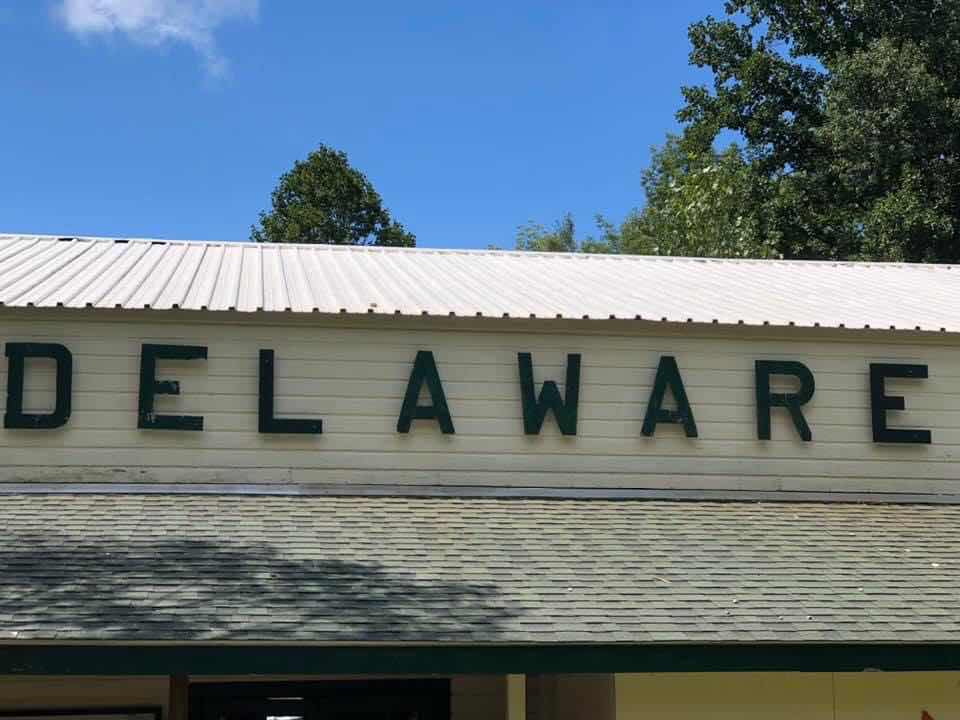
As my study at Hackney College came to an end, I applied for and was accepted to go to Camp America for twelve weeks before going up to Leeds. Camp would be another opportunity to work with children. The camp I was assigned to was Camp Delaware in Connecticut. Around this time I was also to meet my future wife Terrie Cassidy. 
Paul Mordecai and I had been to the Spooky Lady’ club over near Hackney Marshes. It was on the future site of the London Olympic Stadium. Leaving to go home in Paul’s dad’s Green Jag, we noticed two young girls waving us down. Apparently, they hoped we may have been a mini cab. They were at the time being harassed by some blokes in a van. After a quick conversation we agreed to drive them away toward Hackney. Co-incidentally, Cathy, Terries friend, lived just around the corner to my mum. At the house in Malvern Road, there was a celebration going on. Cathy’s brother’s wife, had just given birth that evening. We all sat talking until daylight. Terrie and I later had a date before I went off to Leeds but after returning from camp in America. She reminds me that one weekend, when I returned to London, I called hoping for another date. She told me she was actually going out with friends to a party, but I could come along. So I did. Not long after we had our first official date on December 1st.1979. We went to Steven Marsh’s wedding to his wife June, up at University College, Gower St,  Bloomsbury in London. 
Camp had been a great experience. The camp was up at Winsted Connecticut. The kids who attended this sleepaway camp were predominantly Jewish and came from the New York suburbs. Camp was a great tradition on this side of America. Originally it had been a means of getting poor Jewish kids away from the city but over time had been commercialised and was really quite expensive, especially when multiple family members would go. I flew into NYC with a big group of British and European counsellors. We stayed in a rough old Hotel down near 42nd street for a night before bussing up to Winsted with the campers. Camp lasted eight weeks in all and the deal was that counsellors could travel for a month after camp before heading home. Not surprisingly it was a very different culture for me but having stayed and worked away previously, I soon fitted in. I was assigned to a group looking after 30 ‘five and six year old’s’, along with four other counsellors and a ‘group leader’. It was a surprise then, when after just one week, I was placed in charge of the bunk because the leader Fred Tannenbaum had to go home. The British and European counsellors were usually sports specialist’s and although I did take football, as a leader, I worked with the General counsellors taking our kids from activity to activity. A tradition on camp was a thing called ‘Colour War’ an eternal battle between the Blue and White teams, in the last week of camp. Leaders were elected of the tribes and generational rivalries pivoted on the ‘contest’ between the two groups. Colour War was speculated upon continually. Fake outs occurring to psyche out the whole camp. Leaflets were showered from a plane onto camp declaring ‘Fake out’ and later a group of people riding horses stormed through the camp. Personally, I believed that ‘Colour War’ had the potential to wreck friendships made in the past seven weeks. So concerned was I, that at the Group Leaders meeting I stood up and explained why I thought it would be would be so bad. Everyone, including Lou Adler, the Camp boss, nodded understandingly as this Brit put his case. It was decided there would be no colour war in 79’. It was a big surprise to me then, when Colour War broke out the next evening! Everyone had been distracted by a group of green aliens on a bunk roof. Then, right on cue, a truck pulled up displaying in bright lights the words ‘COLOUR WAR 79’. What did I know?  In reality, Colour War was a control devise to keep the kids in line. Points were awarded for everything. The Americans took their roles super seriously. Life-long memories were being made, reputations  forged, ensuring the campers would return again the following year. And they did. Every year. Some parents explained that if their child didn’t go to the camp, they would be left home in an empty neighbourhood. Teenage boy campers worked as waiters in the dining room while teenage girls were ‘Junior counsellors’. It was like a well-oiled machine. When we finished Camp seven of us hired a big shooting wagon and made our way down to Florida. We visited several University towns on the way. Uni of Pennsylvania, Yale and Emory in Atlanta. Driving a car with New York plates was a hindrance especially driving south. In South Carolina we got done for speeding by a motor-bike cop. He insisted we followed him off the highway to a small own to meet the ‘Magistrate’. The conversation went something like this.
Magistrate: (A small fat bloke with no tie) You were driving 65 in a 55 zone. You need to pay a $120 fine to the municipality”
Our Guilty Driver: “What happens if we don’t pay?” (The rest of us taking photos)
Magistrate: “In that case you will spend the night in the lock-up”.
All of Us: Great we will all spend the night!
Magistrate: “In that case you will pay tomorrow morning”. 
Tiring of the game we all pooled together to make up the $120 fine which we handed over. Immediately, the Magistrate looked at the motor-bike cop and promptly put the money in his pocket.
“Do we get a receipt for that”, we asked as one.
“No” said the Magistrate.
It was later explained that this was a regular local rort to revenue raise from the New Yorkers who drove through going South to Florida. 
We never actually made it to Miami. Hurricane David caught us in Northern Florida on a camp site. We had a choice to stay and bunker-down, on site, or run. By four votes to three we voted to run and set off for Savanah. We stayed one night with the aunt of one of the blokes we were traveling with, then made our way across to Atlanta. At Emory University we experienced some comical Southern pride. The students wore tee shirts which said, ‘Yale the Emory of the North’. As fate would have it I got my A level results whilst on Camp. David Bass rang me from London, at a Winsted telephone box and gave me the news. Talk about performance anxiety, there was quite a crowd listening. It turned out well, I'd got what I needed.
Our after-camp trip had been great but for me it was now time to return home to London, so that I could move up to Leeds and begin the next phase of my study quest.


Friday, 11 October 2019

Bite-me Bake House

The QuiltyView...Life / Work insights. An occasional series looking at other people’s work lives.


Walked into the Bite Me Bakehouse the other day. My third visit in just a few weeks. Strange to say because in my 27 years in the area I had never been there previously, always driving on by. True, for many years it had been known as Rubber Duckies and never really appealed for my custom. In its defence the shop had suffered when the F3 was opened, being effectively bi-passed from the old custom on the busy Pacific Highway. 

The recent ownership change and the building of multi-units on the Highway at Mt Colah has seen a re-emergence of the site for tradies, travellers and families alike. It is good to see a local business do well and its offerings of crusty bread, lovely pastries and pies is impressive. The cherry pie they do ticks too many boxes for me!

In conversation with the manager I congratulated her on the shops impact and she told been she was at the end of a 12 hour shift. They bake everything on site. This revelation took me back to my teens, I had worked for a month in Percy Ingles bakery in the Broadway Market in London as a 15 year old. My old mate Johnny Burnham got me the job and I can honestly say it was one of the toughest jobs I ever did. We’d start at 1.00am and leave at 8.00am. The work itself was wearying in a hot environment but more than that the relentless routine involved got to me. Bread to be mixed, baked  cut and wrapped, doughnuts jammed and the clean up afterwards was tough. We couldn’t leave before the next dough was in the holder and everything spotless. The one painful lesson I did learn was don’t touch newly baked bread! We had dropped a few loaves off the stretcher coming out of the oven. They had been on the floor a while so muggins stopped to picked them off the floor. I still have the fingertip burn scars😳

So as the manager served me in theBite Me Bakery I told her than my Bakery experience was one of the hardest I’d had. She just nodded, smiled and said ‘That would be right!’


Monday, 11 December 2017

Resolution for 2017....take up a new sporting activity.

Before the Bobbo Classic with Colin and Bernie
Having turned sixty in March 2015 I resolved to take up a new sporting activity....cycling. Fortunately I had thought about such a prospect and when my friends asked me what I wanted for that roundy birthday, I said "I want a decent bike!" and that's what I got! In the event, a former student I taught at SPX...Matt Whitmore, was the manager of Spit Cyclery up at Mosman and he set me up with a lovely Bianchi Impulso bike and all the gear that went with it. 

Any two from three

As is the way with any new activity it took me time to really find a new routine. Riding my bike tended to clash with the other loves of my life, running and playing football. It was with purpose then that at the beginning of 2017 I decided to step my cycling commitment and while still playing football eased off on the running. Thus, choosing the low rather than high impact activity and realising the benefits of such a choice. 

The one thing in this store that I can sell you to make a true difference......

Even though I rode bikes as a kid I'd never really used cleats on the pedals. As a matter of fact the one time I did use them I had toppled over at traffic lights so I was very wary of their potential inclusion in my new routine. That is why when I asked a bike-shop guy what he thought of them he said "They are one thing in this store that I can sell you to make a true difference in your performance on the bike"

Building up those legs

One of the things about aging is that you tend to lose muscle definition. It is around the knees in  particular I noticed the loss. Even running regularly and playing football wasn't enough to avoid the loss. Thus, taking up cycling has been a boon for reversing that loss of muscle and definition. My quads and calves have benefitted enormously. The impact of cycling on your legs is one realised across an extended timespan. In the very beginning you tend to traumatise them. Stiff hill climbs seem to send the lactic acid pumping into the legs by the litre. As you become more accustomed to pushing yourself the strength gradually builds. Calves seem to pump up and you get a more muscular definition in the quad area. You are able to recover quicker and this is the true fitness you acquire. 

Friends and Strava

As with any new activity, it is good to get support. Riding with other people makes cycling a very social activity. Our friends Colin and Bernie have certainly embraced it. Out on the highway the cycling community is very supportive and helpful. Personally my main source of motivation has been receiving the feedback available from the Strava cycling app. Thru GPS and mapping it shows you exactly where you have been and how long it took you. In addition it can give feedback on heart rate and as it puts it 'suffer score' relating to how hard you are working.

The thing about Berowra...nowhere is flat!

Fortunately up here where we live in Berowra, nowhere is flat, so you are continually working up and down hills. In addition we are surrounded by four challenging 'gorge routes'. Bobbin Head; Galston Gorge; Berowra Waters and the Brooklyn Hill. These are all rated 3 or 4 in the international difficulty scale so are pretty challenging even in good weather. This year I combined two of the gorges on several occasions but next year will do three or four in one go!

The Bobbo / Terrey Hills ride

My first big group ride was the 'Bobbo' covering a tough 59km around Turramurra Hornsby and then down and back up from Bobbin Head out to Mona Vale Road. For some inexplicable reason I reasoned that that Bobbin Head would be tough but Terrey Hills was just flat! You might have thought that the name would give it away eh? One hill in particular up Duffys Forest was evil. Managed to do it without stopping but people were literally walking up quicker than what I was riding! Took 2h 38m for the ride.

The Gong


Gong finish 90km
In November 2017 I took on another challenge when I did the Sydney to Wollongong ride for MS. Over 10,000 took part on what was an awful wet morning. That said, once we started it was a great experience in and out of the National Park and over Stanwell Tops. The scenery along the new Sea side bridge was stunning. I had two near mishaps coming down in the hills in the driving rain. First one of my eyes closed up thru cream getting into it. I managed to get a perspective down the hill by keeping another rider the same distance in front all the way down. Then on the next descent a lady fell off alongside me, when a stick caught in her spokes. Scarey stuff! Finished strongly in 4h 42m.


Strava 2017 feedback

The Strava app tells me I have done 204 rides in calendar year 2017. This is for a total of 4218km, my goal being 4500km. I'm averaging five rides a week and have ridden 5hr 50m a week for an average distance of 119km. I have climbed 62,246m in the 202hr of riding. Probably sounding like a cycling nerd here but Strava allows you to break up your rides into segments so while you may not feel like going hard all the way, you can work hard for particular segments and see how you go. For each of the past two months I climbed over 8000m in a worldwide climbing challenge.

The Health dividend

As I said earlier riding has definitely strengthened my legs. In addition, with an imposed eating adjustment (high cholesterol), I have also been able to shed 8kg which seems to have improve BP and Heart rate as well. The other benefit has been I actually feel fitter for football as well avoiding injury thru the season...stronger legs a big help! Well there it is. In cycling I have found an activity I hope I can use and enjoy to keep healthy for years to come. Aiming to take on more cycling challenges in 2018:)

Friday, 20 October 2017

Thirty years since the 87' Stock Market Crash....a personal view

Well that was a quick 30 years! Back in October 87' I was a 32 year old Equity Market Maker with County Nat West in London. On what came to be known as 'Black Monday' 19th October, world stock markets crashed across a period of 24 hours. Here is a my take on that day:)
Worked on the London Stock Exchange as an Equity Market Maker for County Nat West during the 87’ crash. It was the first ‘technology enabled’ market plummet of any note. Had worked in the 70’s on the face to face trading floor but with screen based / computer run trading it was a whole new ball game.
It was obvious on that Monday morning that we were seeing a level of volatility unseen previously. To make things worse London and the south east had been hit by massive winds and many workers struggled to into the City. Being a market maker you had an obligation to quote the stocks you traded in a particular ‘size’ ie 100,000 shares to brokers and half that to other market makers. The FT 100 index, which was a geometric mean, showed onscreen thru a live feed. The 100 prices were displayed in alphabetical order, Black if unchanged, blue if ticking upward and red for a downtick. That morning the FT 100 screen moved in waves of red prices occasionally turning momentarily blue for a short rally then going red once again. Through the morning the phones rang hot with those on the other end invariably sellers. What often made things worse was that lifelong broker friends came to you in an attempt to ‘improve’ a price but the market was all one way. Then about 10.30am something fortuitous happened for County Nat West....our computer system failed! There we were in the market crashing maelstrom not able to answer our phones because we no longer knew our stock positions. We could no longer display prices because of this. An hour went past and an eerie calm came over the dealing room while on screen we could see prices continuing to dive. It was costing us money because the prices of stocks we held were falling. However, we actually saved millions with the computer failure because in the crash answering the phones would have involved us buying even more falling stocks.
An odd / funny offshoot to this story from 87’ was the fact that not being able to answer the phones attracted the attention of the Bank of England. Mid morning, like something out of Monty Python, the Bank sent a messenger across the City on foot to come knock on the door and ask why we weren’t answering our phones😊 He told us we were naughty boys not meeting our Market Making obligations...we told him that our computers were down, didn’t know our positions and therefore couldn’t deal!
The implications of the 87’ crash were both immediate and longer term. The Investment Banks who had geared up in The Deregulation of ‘Big Bang’ in 85’ suddenly fuelled a market contraction lasting right into the early nineties. Thousands of Financial Market jobs were cut. Market activity fell significantly and many firms also cut their involvement. One of the key things that had happened in 87’ was the practice of ‘Programmed Trades’. This involved pre-planned ‘what if’ scenarios being drawn up for clients / investors. Thus, if the market index fell so many points in a set time the computer would automatically order particular shares to be sold (without human intervention) This was a questionable practice in normal times but proved disastrous in a rapidly falling market. Literally pouring oil onto the fire🔥
In the eventual investigations that followed 87’ programmed trades were identified and restricted. A bit like ‘short selling’ Financial stocks being banned after the GFC in 08’.
#87crash